>
the next economy is defined by deployment

Technician
Economy™

The Deployment Gap is widening.
The Deployment Gap now limits growth.
The constraint is not capital or a lack of ideas.
It is the ability to install, operate, and sustain systems at scale.
That constraint is technician capacity.

This is the Technician Economy™.
You are viewing "V1" as it goes live on May 04, 2026.
Help Build It
The Problem
Innovation–Deployment Gap
Innovation is accelerating. Deployment is not keeping pace.
The Binding Constraint
Technician Capacity
Not capital. Not technology. Technician capacity limits growth.
Technician Roles
150+
Core role types powering advanced industrial systems
Sectors Covered
12
Advanced industrial sectors requiring technician capability
Deployment Ratio
1:14
1 Engineer : 14 Deployers (technicians & supporting staff) to deploy and maintain.
the structural shift

innovation is accelerating.
deployment is not.

Across industries, the rate of innovation now exceeds the ability to deploy. New systems are designed, financed, and built faster than they can be activated, operated, and sustained in live environments.This gap is structural. It is widening over time.The economy can only realize what it can deploy.
MAGNITUDE / IMPACT TIME THE DEPLOYMENT GAP INNOVATION / CAPITAL DEPLOYMENT / CAPACITY SYSTEMIC DELAY TECHNICIAN CAPACITY CHASM SYSTEMATIC DELAY
TIMEMAGNITUDE / IMPACTINNOVATION / CAPITALDEPLOYMENT / CAPACITYTHEDEPLOYMENTGAPSYSTEMICDELAYTECHNICIANCAPACITYCHASM
This gap is not cyclical. It is structural.
The Constraint

the deployment gap
determines operating capacity

Economic growth does not occur when technology is designed or funded. It occurs when systems are activated, operated, and sustained at scale.
What limits growth
That conversion happens through deployment.

When deployment lags, capital sits idle, activation slows, uptime slips, and production is deferred.

The binding constraint is not invention.
It is technician capacity.
Technician capacity means
  • The ability to install advanced systems in live conditions
  • The ability to operate systems at production scale
  • The ability to maintain and troubleshoot under real conditions
  • The ability to sustain systems over time at scale
Technician capacity now sets the rate at which demand becomes operating capacity.
Technology can be financed. Deployment capacity must be coordinated and built.
What Is Deployment

deployment converts demand
into operating capacity

Deployment is the economic function that takes demand from signal to functioning production. It is not hiring alone — it is the full conversion of demand into operating capacity.
Deployment requires four things
01
Demand Signal

What is needed, where, and when

02
Capability Alignment

Formation matched to requirements

03
Technician Deployment

Routing capability into roles

04
Live Execution

Sustained performance in real environments

Deployment is
The conversion layer where industrial demand becomes uptime, throughput, and operating capacity.
Deployment is not
Hiring alone. Deployment is not a pipeline. Deployment is the full system that converts demand into execution.
Deployment is realized only when technicians are allocated into execution roles and systems begin performing in live conditions.
execution layer

innovation invents.
technicians deploy.

Deployment occurs at the point where systems are installed, activated, and sustained. Technician deployment enables execution in live environments where physical systems, digital systems, and real-world conditions converge.
Operating capacity is created at that point of execution.
The Innovation-Deployment Gap
 
technicians are the bridge

Modern economies are not short on ideas. They are increasingly short on people who can close the gap between invention and reliable real-world operation.
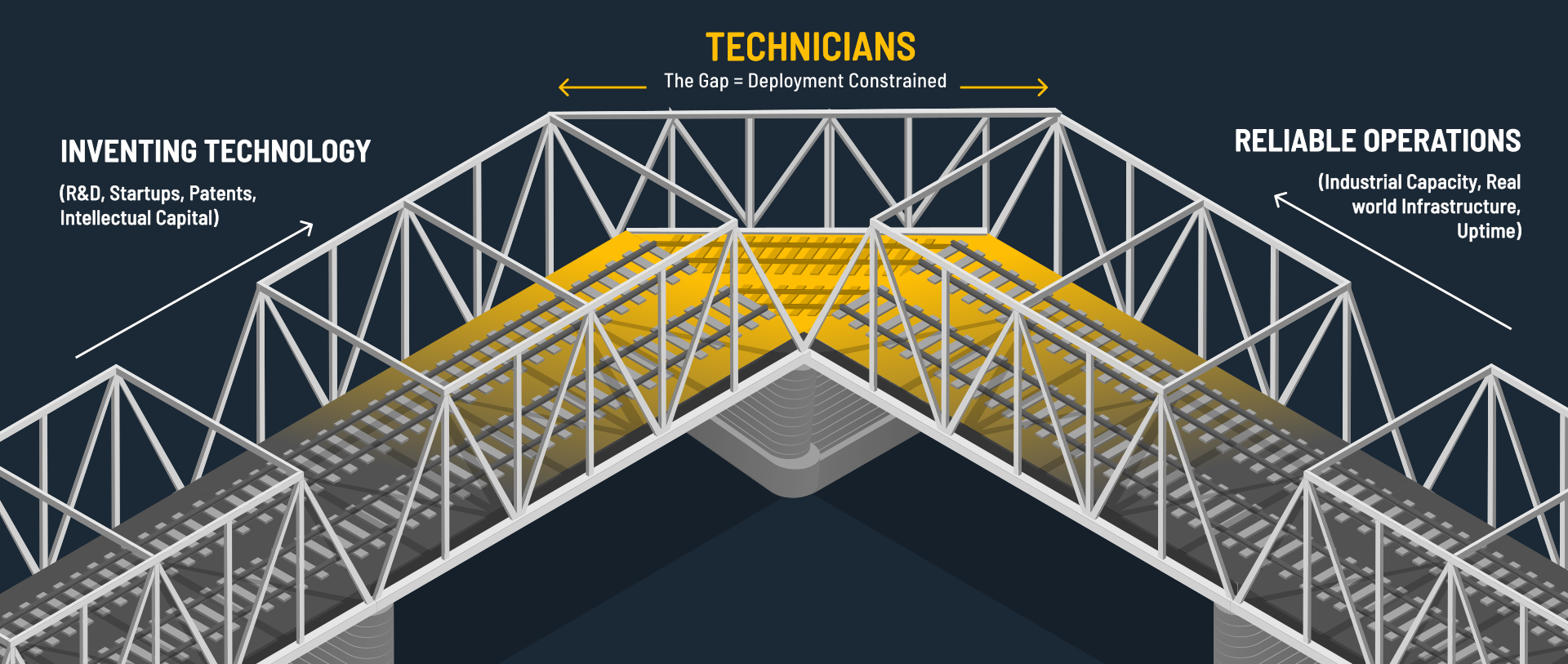
Inventing Technology
(R&D, Startups, Patents,
Intellectual Capital)
Reliable Operations
(Industrial Capacity,
Real-world Infrastructure, Uptime)
Illustration of a bridge with the word TECHNICIANS on the upper deck and text below reading 'THE GAP → DEPLOYMENT CONSTRAINED'.
THE GAPDEPLOYMENT CONSTRAINEDT E C H N I C I A N S

Innovation produces technology. Technicians make technology work.

Innovation Economy
Technician Economy™
Primary ConstraintCapital & Ideas
Constraint
Technician
Capacity
Core ActivityDesigning &
Inventing
Activity
Installing &
Sustaining
Economic FocusDigital Outputs
Focus
Digital + Physical
Systems at Scale
Binding BottleneckVenture Capital
Bottleneck
Skilled & Specialized
Technical Talent
vs
Dimension
Innovation Economy
Technician Economy™
01Primary
Constraint
Capital & Ideas
Technician
Capacity
02Core
Activity
Designing & Inventing
Installing &
Sustaining
03Economic
Focus
Digital Outputs
Physical Systems
at Scale
04Binding
Bottleneck
Venture Capital
Specialized
Technical Talent

The constraint has shifted from innovation to deployment, unlocking operating capacity and durable economic mobility.

Technician Territory
See what execution requires
at the point of deployment.

Technicians act under uncertainty, operate in live environments, and merge physical, automation, and AI systems — where machines and human judgment converge into Skill Capital.

AI-Resistant, not AI-proof
Explore Technician Territory →
10
system failure

The missing layer is
Coordination.

Input exists. Conversion does not.

Industrial demand already exists. Capability formation infrastructure already exists. People building technical capability already exist.
What does not yet exist at sufficient sclae is a coordination layer across them that aligns to the demands of operating capacity

Demand is fragmented. Capability formation is isolated. Technician allocation happens too late.

The result: effort without conversion to operating capacity.
The Coordination Gap

Without coordination, demand does not convert into operating capacity or durable economic mobility. Skills-to-Jobs® is the coordination layer, converting demand into operating capacity and durable economic mobility.

Employer Demand

Signal Layer

Demand is defined by companies hiring technicians across regions, often across dozens of facilities and multiple states. For large, multi-site employers, this demand spans states, operations, and production cycles. Roles, volumes, and timing vary continuously with production, expansion, and maintenance needs.

Training Delivery

Conversion Layer

Capacity is developed across 1,100+ community and technical colleges.Program availability is limited by lab capacity, equipment, instructors, and scheduling, often offered only a few times per year. Waitlists, cancellations, and infrequent lab access further constrain capacity as seen across manufacturing and mechatronics programs nationally.

Current & Future Technicians

Execution Layer

Outcomes are realized in operations, where technician availability directly impacts uptime, throughput, and system performance in environments like automated warehouses, production lines, and energy systems. Delays in deployment translate into delayed production, reduced output, and constrained capacity.

THREE LAYERS OF TECHNICIAN INFRASTRUCTURE.

Demand is defined across companies that hire technicians and the regions they operate. Capacity is developed across 1,100+ community and technical colleges. Capacity formation is fragmented and often disconnected from deployment. Outcomes are realized in operations.

The system does not fail for lack of inputs. If fails for lack of coordination
America's Technician Production Network
1,000+
The Physical Infrastructure
Layer Already Exists

America’s technician production infrastructure, 1,000+ community and technical colleges, is extensive but uncoordinated, constraining the translation of industry demand into deployable capacity and limiting the formation of operating capacity.

explore full network

Technician capacity is geographically distributed, but not yet coordinated to match demand.

Electrified map of America's technician production network — 1,100+ connected nodes across all 50 states
08
Definition

what is the
technician economy™

The Technician Economy™ is an economic system in which deployment capacity constrains the conversion of demand into operating capacity, with technician deployment as the primary enabling mechanism. The Technician Economy™ exists because coordination is required for deployment.
The coordination infrastructure that converts industry demand into deployable technician capacity for advanced physical and digitial systems

The Technician Economy™ is defined by the technicians required to operate advanced industry.

Technology is not the constraint. Deployment is. Deploying and sustaining advanced systems requires capacity that does not yet exist at scale.

Technician capacity underpins all advanced industry.

Why Now
Billions are being invested in industrial capacity. The constraint is no longer capital, it is deployment.
National Security Imperative
This is not only an economic constraint, it is a national security imperative. Economic security is national security, and the ability to deploy and sustain advanced systems determines industrial strength, supply chain resilience, and strategic advantage.
Woman wearing glasses working on a laptop in a high-tech laboratory surrounded by electronic equipment and wiring.
Historical Context

Each era is defined by a constraining capability.

Factories built the industrial economy. Universities built the knowledge economy. Startups built the innovation economy. Technicians run the systems all three depend on.

I. Industrial
Production Capacity
II. Knowledge
Educated Workforce
III. Innovation
Commercialization Speed
IV. Technician ←
Technician Capacity
View historical eras →
12
operating model

demand, capability and deployment
must operate as one

Operating capacity is created when demand, capability formation, and technician deployment are aligned and executed as a single coordinated system.

When these components operate independently, conversion slows or fails.
When they operate together, deployment accelerates and capacity is realized.
The Technician Economy Equation™ — Converting Demand into Operating Capacity
DEPLOYMENT THROUGHPUT (CONVERSION RATE) INPUT PHASE DEPLOYMENT PRIMARY OUTPUT OUTCOMES HUMAN 01 DEMAND SIGNAL SYSTEM INPUT 02 CAPACITY FORMATION CONVERSION LEADING SIGNAL 03 DEPLOYMENT EXECUTION CORE DRIVER 04 OPERATING CAPACITY PRIMARY OUTPUT SYSTEM GOAL 05 REGIONAL ADVANTAGE GEOGRAPHY COMPETITIVE EDGE 06 ECONOMIC GROWTH OUTCOME SYSTEMIC 07 DURABLE ECONOMIC MOBILITY HUMAN OUTCOME ↺ Continuous Loop: Real time demand signals re-enter the system
Core thesis: Demand converts into operating capacity through coordinated capacity formation and deployment. When deployment throughput is high, capacity scales. When constrained, growth stalls. Deployment produces two outcomes: operating capacity for systems and durable economic mobility for individuals. ↻ Capacity formation and deployment occur concurrently.
what determines system performance
01 · Demand
Volume, Timing, Specificity
02 · Capability Formation
Alignment, Throughput, Readiness
03 · Deployment
Timing, Routing, Execution

System performance is determined by how tightly these three variables are aligned in time and place. Demand, capability, and deployment must operate as one.

11
coordination engine

Skills-to-Jobs®
powers the coordination layer.

Skills-to-Jobs® is the coordination infrastructure that makes the Technician Economy™ operational. It aggregates fragmented demand across employers and regions, translates that demand into aligned capability requirements, connects colleges and training infrastructure to those requirements, and routes verified capability into specific technician roles.
COORDINATION INFRASTRUCTURE INDUSTRY DEMAND SYSTEM SKILL CAPITAL SYSTEM EMPLOYER DEMAND MORE EMPLOYERS INDUSTRIAL CAPACITY COLLEGES SKILL PATHS™ CURRENT & FUTURE TECHS TECHNICIAN HIRES
Industry Demand System
·
Skill Capital System
·
Unmudl Coordination
EMPLOYER DEMAND MORE EMPLOYERS INDUSTRIAL CAPACITY COMMUNITY & TECHNICAL COLLEGES ALIGNED SKILL PATHS™ TECHNICIANS TECHNICIAN HIRES Skills-to-Jobs® INDUSTRIAL DEMAND SYSTEM CAPACITY SYSTEM COORDINATION LAYER
Industry Demand
·
Capacity System
·
Skills-to-Jobs® Coordination
Training alone does not produce operating capacity. The primary constraint is coordination across demand, capacity, and placement. Skills-to-Jobs® connects these infrastructures, converting demand into operating capacity.

The system is continuous: operating capacity produces new demand, which re-enters coordination and drives ongoing deployment. Capacity is formed through deployment, not before it. Deployment produces two outcomes: operating capacity for systems and durable economic mobility for individuals.
This constraint is already measurable at national scale

the scale of the
technician economy™

Verified data on technician workforce demand, industrial deployment, and economic impact across the United States. All statistics are sourced, referenced, and continuously updated.
capital investment
$1T+
Industrial capital investment
Demand: Demand Exists
Source: U.S. Census Bureau — Annual Capital Expenditures Survey 2022
Projected Need in Manufacturing
3.8M
Manufacturing roles needed
Demand: Demand is not being met in manufacturing
Source: National Association of Manufacturers
Economic loss
$1T
Lost from unfilled roles
Output is constrained
Source: The Manufacturing Institute
Labor Market Constraint
~6.9M
Persistent U.S. job openings (BLS JOLTS)
Growth is constrained economy-wide
Source: U.S. Bureau of Labor Statistics (JOLTS)
Physical Infrastructure Base
1,000+
Community & technical college locations
Infrastructure exists, not converting demand into deployment
Source: American Association of Community Colleges
Working Span
Ages 15–64
Working learner population — 212M+
Path to deployment exists
Source: Federal Reserve Bank of St. Louis

Statistics are being verified and expanded. A complete sourced reference document will be published. Numbers will be updated as new data becomes available.

These signals show that demand is present, but the economy lacks the capacity to convert it into operating output. The bottleneck is not capital or ideas. It is deployment.
16
DEMAND LAYER

150+ roles Where Demand Becomes Operating Capacity

Deployment occurs across technician roles in manufacturing, energy, mobility, infrastructure, and industrial systems.
These roles are where systems are installed, operated, and sustained, and where operating capacity is created.
Beta
This demand map is continuously refined as industrial systems evolve. Submit a demand signal to improve demand visibility across roles and regions.
Smiling construction worker wearing an orange helmet and gloves giving a thumbs-up gesture.
Demand does not exist in aggregate, it exists as specific roles across systems.
ADVANCED MANUFACTURING & AUTOMATION
Operate and sustain production systems
Energy & Infrastructure
Maintain and scale infrastructure systems
Transportation & Defense
Ensure reliability of operational systems
SEMICONDUCTOR SYSTEMS
Enable precision fabrication systems
LOGISTICS SYSTEMS
Enable continuous distribution systems
PHARMA & BIOPRODUCTION
Operate controlled production systems
These roles are where deployment occurs, where demand becomes operating capacity.
15
Regional Technician Economies™

where the technician
economy™ is active

Deployment happens regionally.
Each region converts demand into operating capacity at a different rate, depending on coordination across employers, institutions, and technician deployment.
Advanced Manufacturing Emergence
Georgia
Activation constrained

Georgia’s advanced manufacturing base is expanding rapidly; EV, battery, and industrial systems coming online across the state. New facilities are being built faster than they can be fully activated. The constraint is not investment. It is how quickly these systems become operational.

Advanced Manufacturing Hub
Dallas–Fort Worth, TX
Execution constrained

DFW is scaling across aerospace, defense, logistics, data centers and semiconductors simultaneously. Multiple industries are expanding at once across a shared industrial base. Demand is clear. The challenge is turning that demand into operating capacity across employers at speed.

Semiconductor Triangle
Phoenix / Maricopa, AZ
Execution constrained

Phoenix anchors one of the largest semiconductor expansions in the country, with new fabs coming online at unprecedented scale. Every facility depends on precise, continuous activation, where delays compound quickly across the system.

Defense & Submarine Systems
Hampton Roads / Norfolk, VA
execution constrained

Home to naval shipbuilding and submarine systems, Hampton Roads operates some of the most complex industrial infrastructure in the world. These systems do not scale incrementally. They depend on sustained execution across highly specialized environments.

Pharmaceutical Manufacturing
New Jersey
Activation constrained

New Jersey remains the center of U.S. pharmaceutical and biotech production, with facilities expanding and reshoring accelerating. Production capacity exists, but scaling it requires continuous activation across tightly controlled systems.

Logistics & Air Cargo Hub
Cincinnati / CVG, OH-KY
Execution constrained

CVG is one of the largest air cargo hubs in North America, supporting continuous, high-volume logistics operations. The system runs without pause. Its performance depends on maintaining operating capacity in real time.

Regional Case Study · New Mexico
Real-World Deployment:
The New Mexico Engine
"New Mexico produces science, but technicians make it operational."

New Mexico concentrates national laboratories, aerospace systems, semiconductors, and energy infrastructure in one region. But none of it operates at scale until it is installed, maintained, and sustained in the real world.

This is where demand becomes operating capacity, or fails to.
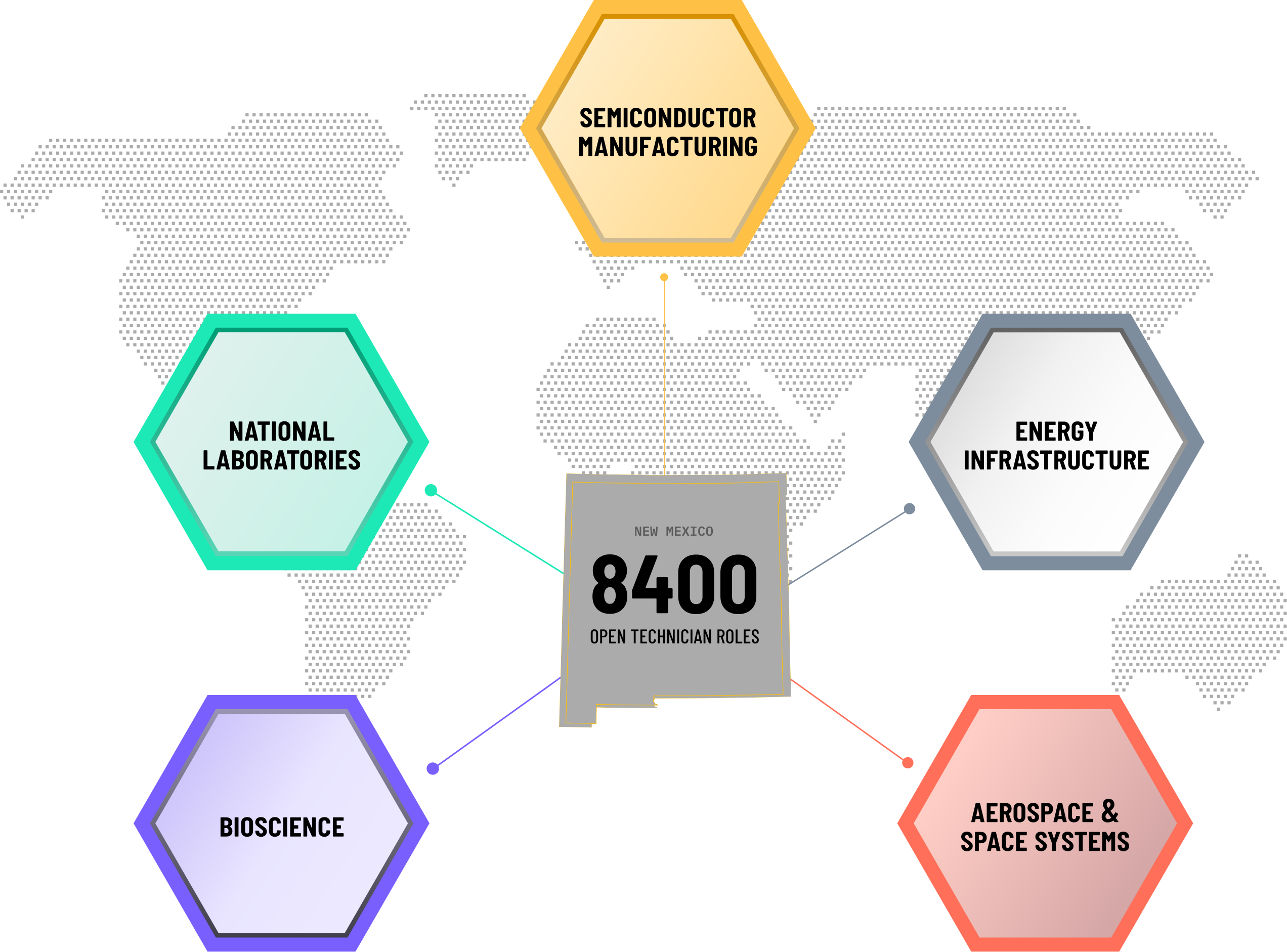
* Aggregated estimate across advanced industry sectors
Central microchip labeled '8400+ Open Technician Roles' connected to hexagons representing industries: Semiconductor Manufacturing, Energy Infrastructure, Aerospace & Space Systems, National Laboratories, and Bioscience.
18
TECHNICIAN ECONOMY™ navigation

The map of the
technician economy™

A guide to the five sites in the Technician Economy™ network - what each one is, who it serves,and why it exists
System Gateway
Technician Economy

Defines the economic framework and connects the four layers, orienting users before they enter through a specific pathway.

AWARENESS LAYER
tech of tomorrow logo

Technicians of Tomorrow™

Defines the future of technicians and their role in the economy.

A destination focused on how technician roles are evolving, why they matter, and how technician capacity is shaped over time.

For: current and future technicians, working learners, government, philanthropy, and leaders shaping economic mobility.

Why it exists: To establish the long-term direction of the Technician Economy™.

techniciansoftomorrow.org ↗
AWARENESS LAYER
tech of tomorrow logo

Technicians of Tomorrow™

Defines the future of the Technician Economy™ and the role of technician capacity in economic growth.

A national platform led by the Technician Economy Futures Council, bringing together leading colleges and employers, to define how technician capacity is formed, deployed, and scaled

For: industry leaders, community and technical colleges, government, philanthropy, and
partners shaping economic systems

Why it exists: To define, test, and evolve the frameworks that determine how the United States converts demand into operating capacity and durable economic mobility.

Read MoreRead Less
Technicians of Tomorrow ↗
DEMAND VISIBILITY
technician of america logo

Technicians of America™

See where opportunity exists.

Explore technician roles, technician paths, and demand by state, what jobs are available, where they are, and how to access them.

For: current and future technicians, working learners, manufacturers, government, regional leaders, and industry partners.

Why it exists: To make technician opportunity visible and actionable.

Technicians of America ↗
DEMAND COORDINATION
Manufacturing America logo

Manufacturing america™

Focus on manufacturing careers and industry.

Explore manufacturing jobs, employers, and state-level activity, and engage as a technician, employer, or partner in the manufacturing sector.

For: Current and future technicians, working learners, manufacturers, government, regional leaders, and industry partners.

Why it exists: To organize and strengthen the manufacturing ecosystem.

Manufacturing America ↗
Technician Gateway
Unmudl logo

Skills-to-Jobs®

Unmudl is the Technician Gateway 

Unmudl is the technician gateway to skill paths, creds, and jobs.
Access aligned skill paths, credentialing, and connect directly to technician jobs through the Skills-to-Jobs® network.

For: Current and future technicians, working learners, job seekers, employers, and community and technical colleges.

Why it exists: To convert intention into technician hires.

Unmudl ↗
TecHnician entry
Unmudl logo

Techs of Tomorrow™

Explore technician roles and connect with companies hiring technicians.

A place to hear directly from employers, understand technician roles, and see how individuals become eligible for jobs.

For: Current and future technicians and working learners.

Why it exists: To connect individuals directly with employers and real job opportunities.

Techs of Tomorrow ↗
These five sites form the Technician Economy™ navigation system connecting current and future technicians, and leaders across industry, government and philanthropy across regions to move from understanding, to opportunity, to action.
Measurement · TCI™

Technician
Capacity Index™

A composite indicator measuring how effectively regions convert demand into operating capacity — tracking where deployment throughput is constrained.

Explore the full TCI framework →
Demand Density
Concentration of demand signals
Alignment
Match quality between supply and demand
Deployment Velocity
Speed from readiness to deployment
Defining the Technician Economy™

The language of the
operating system

Every term in the Technician Economy™ has a precise definition. Understanding the vocabulary is how you understand the system — and how you talk about it with precision.

View the full Glossary →
Core Equation
Demand → Capability Formation → Deployment → Operating Capacity
Deployment throughput determines the rate of conversion. Capacity formation and deployment occur concurrently.
Technician Economy™
Core System
Deployment Throughput
Primary Signal
Skill Capital
Capability Stock
Skills-to-Jobs® Infra.
Coordination Layer
+ 18 more defined terms across 7 layers
View all →
↓ Free Download
The Technician Economy™
Playbook

The complete framework for understanding, explaining, and engaging with the Technician Economy™. Covers the Equation™, three core concepts, regional dynamics, the flywheel, and how the Skills-to-Jobs® infrastructure connects participants to the system. Includes the 90-Day Launch Roadmap and Regional Readiness Assessment.

Download the Playbook
PDF · Full Framework · Free
19
Entry Points

eight entry points
into the economy

Technician Economy™ defines the system and routes participation into it. Different audiences enter through the part of the infrastructure built specifically for them.
Awareness
Deployment
Demand Visibility
Coordination
Each entry point connects to a system layer, but all operate within a single coordinated system.
↓ Take Action
EXPAND DEPLOYMENT
CAPACITY
WHERE DEMAND EXISTS

The constraint is clear. The system is defined. The coordination layer exists. Now the work is to expand deployment capacity.

  • Aggregate demand

  • Align capability formation

  • Coordinate technician deployment

  • Convert demand into operating capacity

Technician Economy™ Review
Subscribe to Newsletter

Stay informed on the rise of the technician workforce. The Technician Economy™ Review: trends, data, regional updates.

Subscribe Now →
leaders & employers
download the playbook

The complete Technician Economy framework™: the Equation, core concepts, regional dynamics, and 90-day launch roadmap.

Get the Playbook →
Workforce & Colleges
Explore Technician Roles

Browse the national technician role library: 100+ roles across manufacturing, energy, defense, logistics, semiconductors, and pharma.

View All Roles →
Companies Hiring Technicians
Connect as Employer

Measure your technician pipeline value, coordinate hiring demand, and connect with the workforce infrastructure built for industrial employers.

Go to TPV-Technicians →
Current & Future Technicians
Find Technician Training

Get skills. Get credentials. Get hired. Find affordable, employer-aligned skill paths through community and technical colleges on Unmudl.

Unmudl Your Future →
community voices
submit a blog

Share your perspective on workforce development, technician deployment, or regional economic strategy. We review every submission.

submit blog →
leadership
Nominate for the Futures Council

Know a national leader from industry or community and technical colleges? Nominate them for the Technician Economy Futures Council™.

nominate →
workforce & colleges
Connect as a College

Community and technical colleges are the backbone of technician development. Connect your institution to the Skills-to-Jobs® network.

connect as a college →
regional leaders
Establish your local Technician Economy

Connect regional employers, colleges, and partners to build a coordinated technician system in your area.

Start Here →
The Technician Economy Futures Council™
'defining the future' of the Technician Economy.
Infrastructure. foresight.
coordination at scale.
Infrastructure requires institutional action.

The Technician Economy Futures Council™ convenes national leaders from industry and community & technical colleges to define and accelerate the Technician Economy™—ensuring demand is translated into coordinated action that enables deployment into operating capacity and durable economic mobility at scale.

co-chair

Matt Austin, JD

Principal, Program Strategy & Development, Amazon Career Choice.
co-chair

Tracy Hartzler, J.D.

President, Central New Mexico Community College.
Nominate for the Futures Council →

Closed group · ~6 colleges · ~6 employers · ~4 partners · By nomination only

National
Scope of coordination
Industry + College
Dual leadership structure
Long-Term
Foresight orientation
14
upcoming events

where the Technician
economy™ launches

Key dates in the public launch, coordination, and regional activation of the Technician Economy™ framework, connecting industry, colleges, and partners at scale.
upcoming events
TBD
roundtable
AUS Technician Roundtable
JOin Now
TSTC Campus · Williamson County, TX

Hosted at TSTC – Williamson County campus. Kori Bowen is leading.

May
05
2026
colleges
Community & Technical College Forum
Santa Fe / Close It · ARM

Parminder chairing alongside Kris R, Matt Lee, Tracy & Amy.

June
18
2026
roundtable
HOU Technician Roundtable
JOin Now
TBD

Co-hosted with TSTC and BlueForge Alliance

May
19
2026
launch
DFW Launch
Dallas · Jim, Hope & Parminder

Public launch of ManufacturingDFW.org. Technician Roundtable to follow for those interested.

Jun
22
2026
anniversary
Manufacturing GA One-Year Anniversary
Savannah / Hilton Head · MGM

One-year anniversary milestone for Manufacturing GA, paired with a Technician Roundtable. June 22–25.

Jul
7
2026
roundtable
Launch OH Technician Roundtable
Cincinnati · No. KY Chamber of Commerce

Ohio launch roundtable hosted with the Northern Kentucky Chamber. AMZN Prime Air tour in the afternoon.

Jul
8
2026
roundtable
KY/IN Technician Roundtable
Louisville, KY · Amatrol / Mark Goodman

Kentucky and Indiana regional roundtable in Louisville, coordinated with Amatrol and UPS.

Aug
15
2026
Market Launch
Mexico City Launch
Mexico City · AMZN

MEX Presence and market launch event, expanding the Technician Economy™ framework into Mexico.

apr
21
2026
press
AUS Technician Roundtable
TSTC Campus · 1600 Innovation Blvd, Hutto, TX 78634

Technician Roundtable hosted at TSTC – Williamson County campus. Kori Bowen is leading.

may
05
2026
colleges
Community & Technical College forum
Santa Fe / Close It · ARM

Community and Technical College forum hosted with ARM. Parminder chairing alongside Kris R, Matt Lee, Tracy & Amy.

may
19
2026
features council
dfw launch
Dallas · Jim, Hope & Parminder

Public launch of ManufacturingDFW.org. Technician Roundtable to follow for those interested.

jun
22
2026
anniversary
Manufacturing GA One-Year Anniversary
Savannah / Hilton Head · MGM

One-year anniversary milestone for Manufacturing GA, paired with a Technician Roundtable. Running June 22–25.

july
07
2026
roundtables
Launch OH Technician Roundtable
Cincinnati (No. KY Chamber) · No. KY Chamber of Commerce

Ohio launch roundtable hosted with the Northern Kentucky Chamber of Commerce. AMZN Prime Air tour in the afternoon.

july
08
2026
roundtable
KY/IN Technician Roundtable
Louisville, KY · Amatrol / Mark Goodman

Kentucky and Indiana regional technician roundtable in Louisville, coordinated with Amatrol and UPS.

aug
15
2026
anniversary
Mexico City Launch
Mexico City · AMZN

MEX Presence and market launch event, expanding the Technician Economy™ framework into Mexico.

Stay ahead of launch milestones, regional activations, and coordination announcements.
Subscribe to the Technician Economy Review →
08
Deeper Framework

how the system
functions at depth

Beyond the headline framework, the Technician Economy™ contains structural concepts that explain how the system coordinates, produces value, and sustains itself over time.

Industrial Productivity

How technicians increase the productivity of capital

Technicians don't just operate technology, they enable technology to generate economic value. By maintaining, troubleshooting, and optimizing complex systems, technicians increase the productive output of industrial capital. Equipment runs longer, downtime decreases, and advanced systems operate at higher performance. When technician capability is weak, even the most advanced technologies underperform.

Market Signals

How the Technician Economy™ coordinates decisions

In the Technician Economy™, the critical signals are not abstract labor statistics. They are real indicators: employer demand for specific technician roles, wages tied to technician capability, time-to-hire for critical roles, credential value in the labor market, and regional concentration of industrial demand. When signals are visible and coordinated, skill development aligns with demand, hiring becomes efficient, and industrial capacity expands confidently.

Industrial Resilience

Why technician capability stabilizes critical systems

Modern economies depend on complex technical systems that must operate continuously, energy grids, logistics networks, aircraft fleets, manufacturing lines, defense systems. Their reliability depends on skilled technicians who install, maintain, diagnose, and repair them. When technician capability is strong, infrastructure remains reliable. When it is weak, downtime increases, maintenance backlogs grow, and complex systems become harder to sustain.

Capability–Technology Loop

How the system evolves over time

Technological progress and technician capability reinforce one another. New technologies increase the need for technicians capable of operating them. As technician capability grows, industries gain confidence to deploy more advanced technologies. This creates a reinforcing loop: technology increases system complexity → complex systems require higher capability → greater capability enables more advanced technology deployment.

Governance Layer

How the Technician Economy™ maintains alignment

Large economic systems require institutions that maintain coordination across participants. In the Technician Economy™, this means community and technical colleges that anchor training, industry partnerships that define skill requirements, credential frameworks that validate capability, and public and philanthropic partners that support regional coordination. Without governance, technician Skill Paths™ fragment; with effective governance, demand, delivery, and capability stay aligned.

Durable Economic Mobility

One of the most important outcomes

Technician careers connect skill development to employment in industries that must operate continuously regardless of economic cycles. These roles provide stable employment, clear wage progression, opportunities for specialization, and continuous technical learning. Unlike work where skills quickly become obsolete, technician careers are built on Skill Capital that deepens through experience, creating long-term career durability and economic security.

community voices

the technician economy™
blog

Perspectives from practitioners, educators, employers, and technicians building the infrastructure of advanced industry. These are field-level voices.

Have a perspective to share on technician workforce development, deployment, building industrial capacity, or accelerating economic mobility?

Submit a completed blog or an idea & join the Technician Economy™ conversation

↓ contribute

sUBMIT a
blog idea

The Technician Economy™ is built by practitioners. If you have a perspective on workforce development, technician deployment, industrial capacity, or regional economic strategy, we want to hear it. Submit a blog and we'll review it for publication.

We review every submission. You'll hear back within 5 business days.

Thank you! Your blog submission has been received. We'll be in touch.
Oops! Something went wrong. Please try again.
Thank you! Your submission has been received!
Oops! Something went wrong while submitting the form.
↓ the technician economy™ review

subscribe to
technician economy
review™

Workforce trends, regional data, policy updates, and coordination framework news, delivered monthly to leaders building the Technician Economy™. First edition May 13, 2026.
Thank you! Your submission has been received!
Oops! Something went wrong while submitting the form.