Regional Technician Economies™
.svg)
Technician Economy
Georgia’s advanced manufacturing base is expanding rapidly; EV, battery, and industrial systems coming online across the state. New facilities are being built faster than they can be fully activated. The constraint is not investment. It is how quickly these systems become operational.
DFW is scaling across aerospace, defense, logistics, data centers and semiconductors simultaneously. Multiple industries are expanding at once across a shared industrial base. Demand is clear. The challenge is turning that demand into operating capacity across employers at speed.
Phoenix anchors one of the largest semiconductor expansions in the country, with new fabs coming online at unprecedented scale. Every facility depends on precise, continuous activation, where delays compound quickly across the system.
Home to naval shipbuilding and submarine systems, Hampton Roads operates some of the most complex industrial infrastructure in the world. These systems do not scale incrementally. They depend on sustained execution across highly specialized environments.
New Jersey remains the center of U.S. pharmaceutical and biotech production, with facilities expanding and reshoring accelerating. Production capacity exists, but scaling it requires continuous activation across tightly controlled systems.
CVG is one of the largest air cargo hubs in North America, supporting continuous, high-volume logistics operations. The system runs without pause. Its performance depends on maintaining operating capacity in real time.
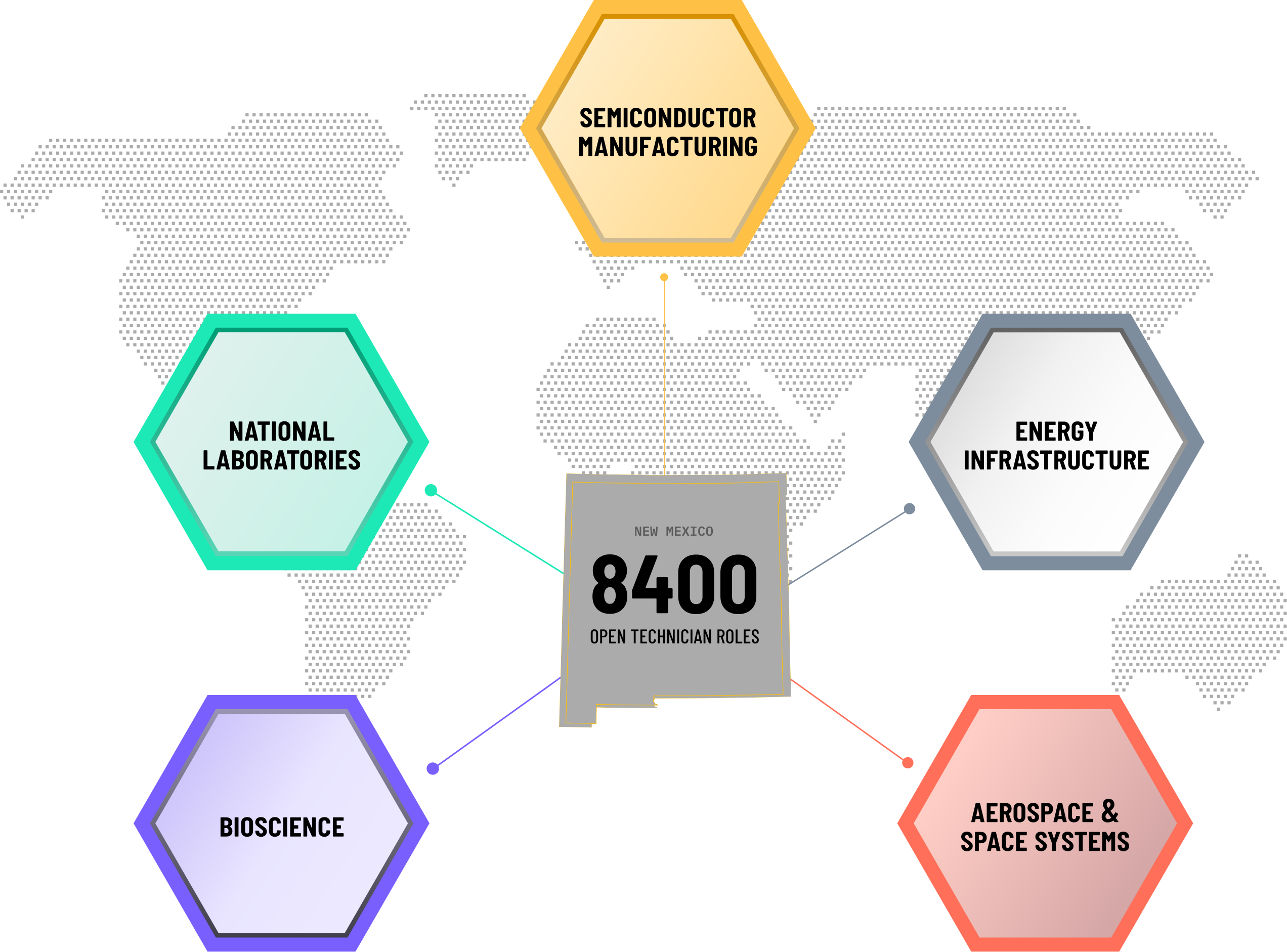
New Mexico concentrates national laboratories, aerospace systems, semiconductors, and energy infrastructure in one region. But none of it operates at scale until it is installed, maintained, and sustained in the real world.
This is where demand becomes operating capacity, or fails to.
When regions can see where technician demand is emerging, where capacity is constrained, and how deployment systems are performing, they can coordinate faster and build durable industrial advantage.