.svg)
The Technician Economy™ has entered its national activation phase, moving from framework development to regional implementation. This inaugural issue tracks the May 2026 Santa Fe launch, the formation of the Technician Economy Futures Council™, and the first regional activations underway across the country.
At its core, the Technician Economy™ is a double-bottom-line strategy: helping regions and employers increase operating capacity while expanding durable economic mobility for the technicians who deploy, operate, maintain, and scale modern systems.
Across advanced manufacturing, aviation, logistics, energy, automation, infrastructure, semiconductors, data centers, healthcare technology, and industrial systems, the United States is investing heavily in complex technologies. But those systems do not deploy, operate, maintain, troubleshoot, or scale themselves. They depend on technicians.
This is the innovation deployment gap: the growing mismatch between investment in advanced technology systems and the trained technician capacity required to make those systems operational. When technician capacity lags behind capital investment, new systems can be delayed, underused, operated below capacity, or scaled more slowly than intended.
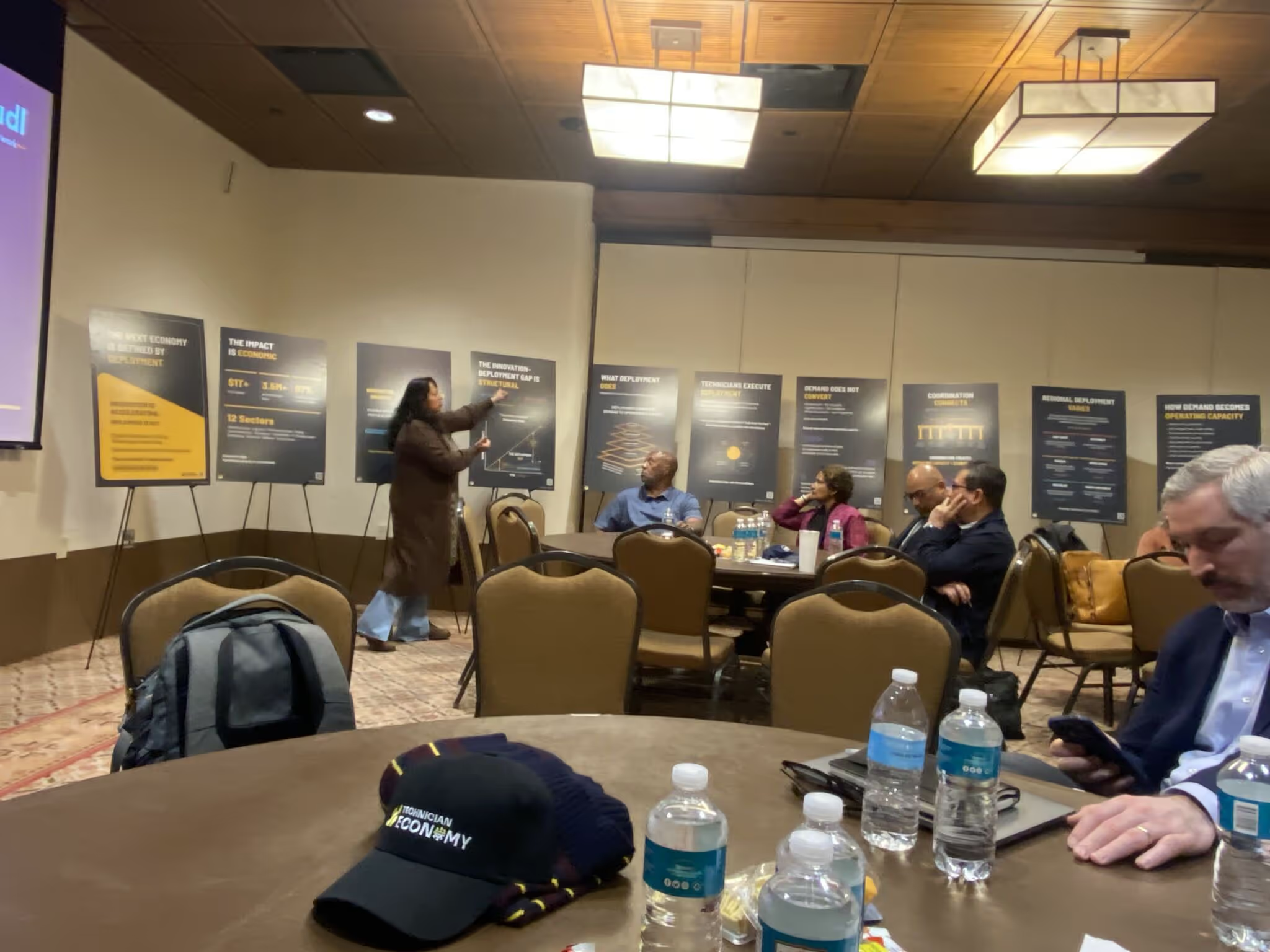
Technician Economy™ Signals
Four signals are becoming increasingly clear:
Why Technician Capacity Matters Now
Across advanced manufacturing, energy systems, logistics, aviation, semiconductors, and data infrastructure, the challenge is no longer simply inventing new technologies. It is deploying, operating, maintaining, and scaling them reliably in the physical world.
The Technician Economy™ reframes technician shortages as a constraint on deployment, not simply a hiring problem. Modern economies are struggling to convert capital investment into operating capacity quickly enough to meet demand. The regions, employers, and colleges that solve this problem first will be better positioned for long-term industrial resilience and economic competitiveness.
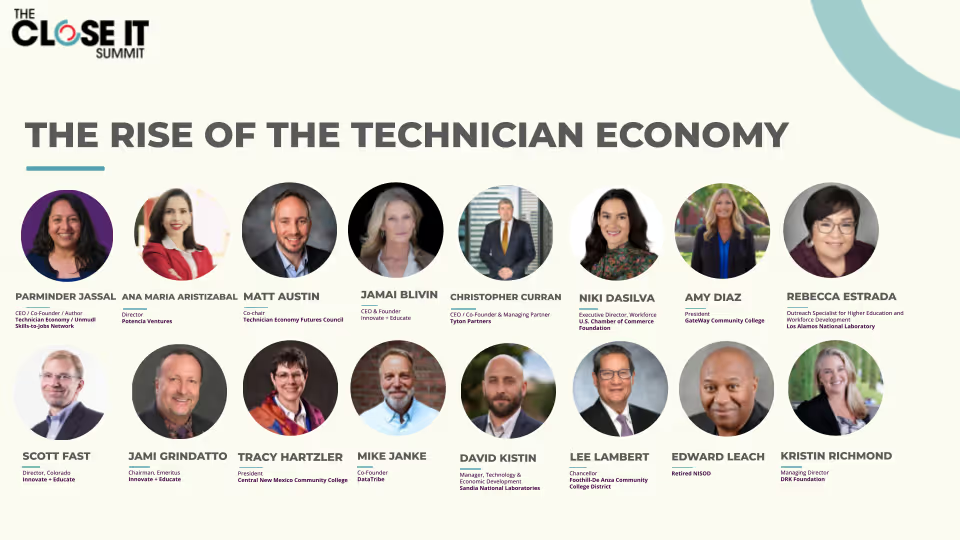
From Strategy to Launch to Regional Activation
The activation unfolded across three days. The conversations began with strategy sessions among core collaborators and partners, moved into the public launch of the framework and Futures Council, and concluded with working discussions focused on regional coordination and implementation.
The launch sequence began with a strategy session convened by Unmudl, bringing together core collaborators helping shape the direction of the Technician Economy™ initiative. The conversation focused heavily on regional deployment systems, technician capacity constraints, and the need for stronger coordination between employers, colleges, and workforce infrastructure.
A recurring theme throughout the session was that demand already exists. Capital investment is flowing into advanced industries across the country. Yet many regions still struggle to translate that demand into deployable operating capacity at the speed industry requires.
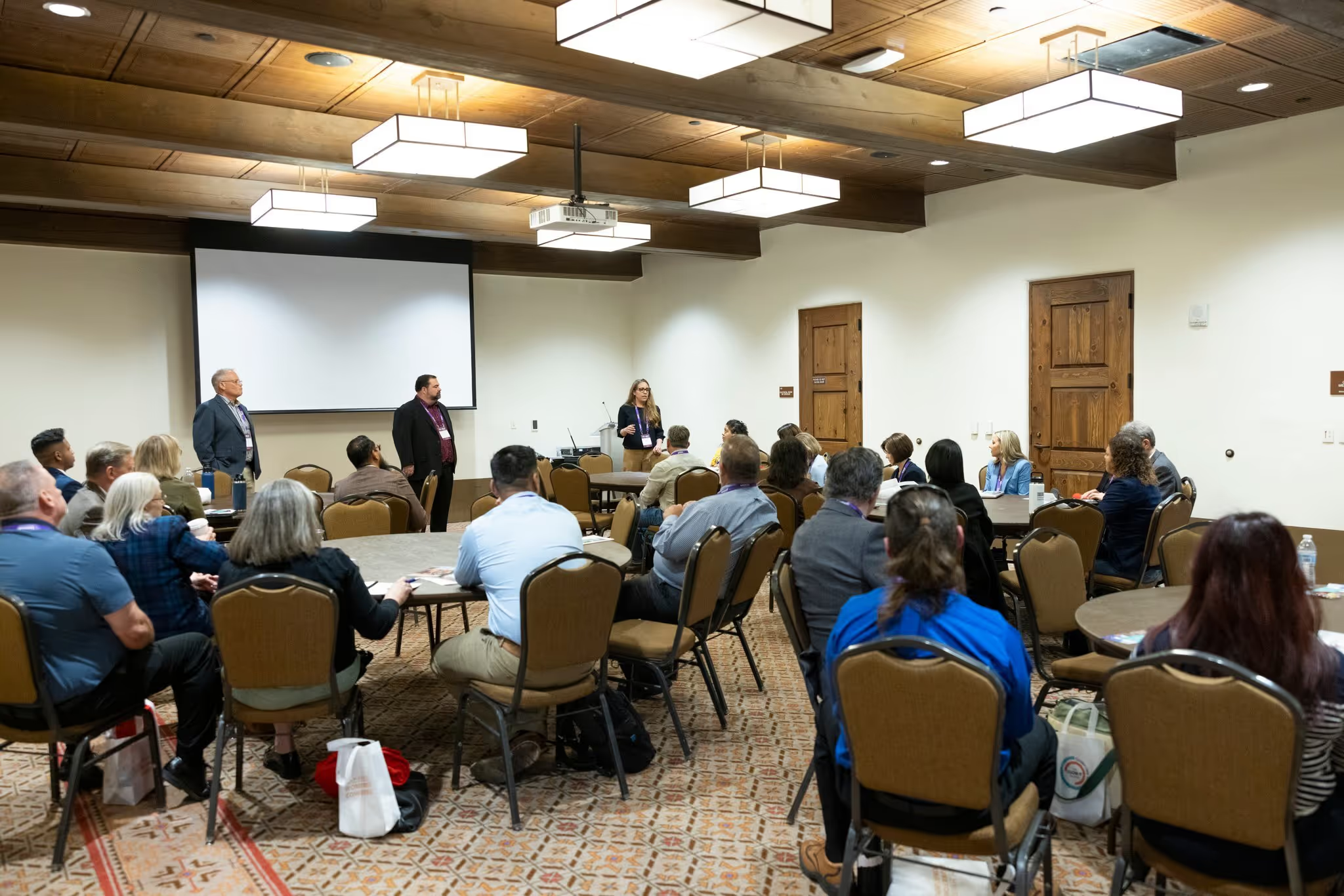
The morning included the announcement of a forthcoming IMAX documentary on technician capacity and the future of skilled work — a national storytelling effort to elevate the technician layer as central to industrial resilience and economic competitiveness.
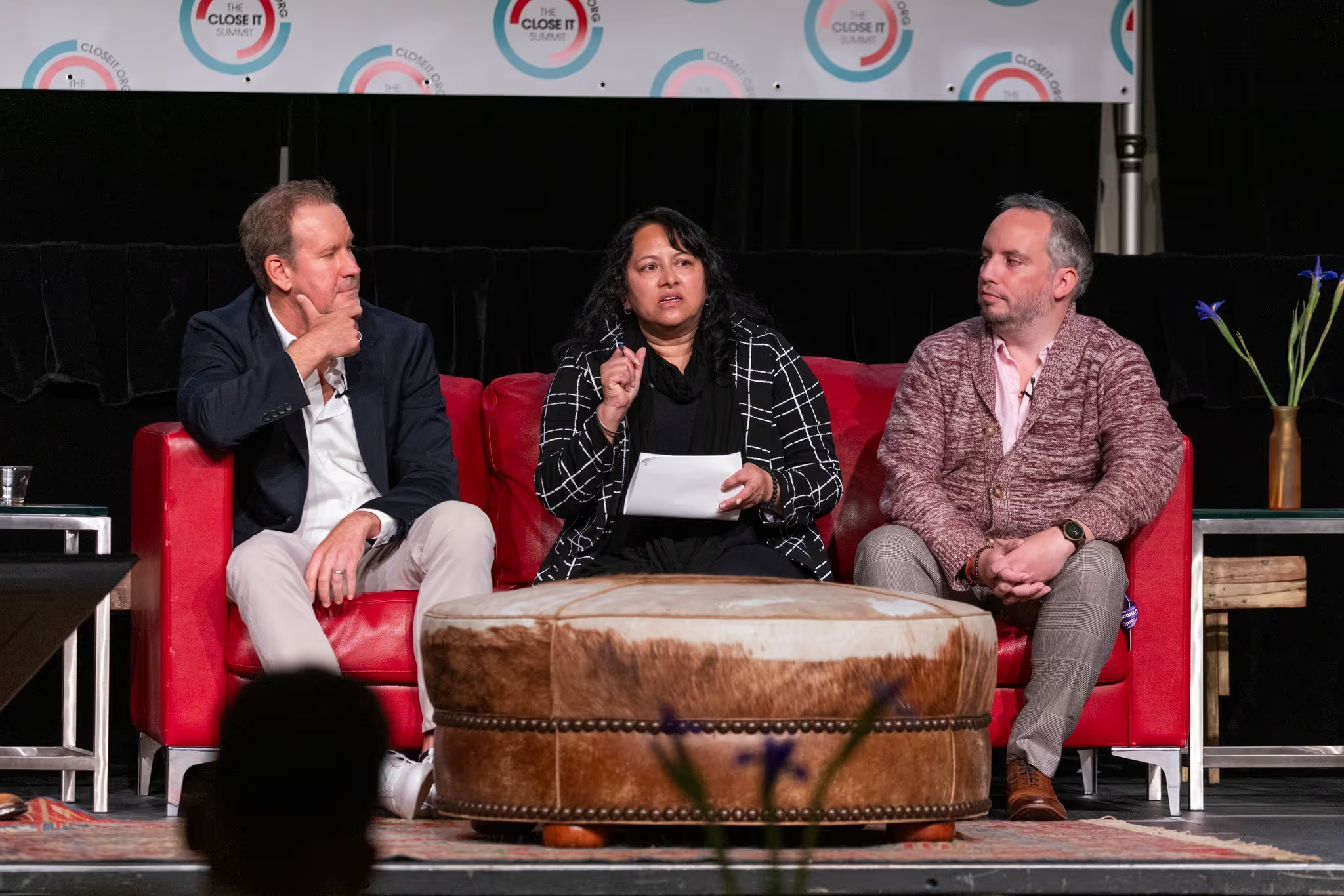
The launch plenary introduced the New Mexico Technician Economy™, announced the Colorado Technician Economy™ initiative led by Jamai Blivin, CEO of Innovate+Educate, and introduced the Technician Economy Futures Council™. The Council brings together leaders from industry, community and technical colleges, workforce innovation, philanthropy, economic development, and regional strategy.
The Council is co-chaired by Matt Austin of Amazon and Tracy Hartzler, President of Central New Mexico Community College.
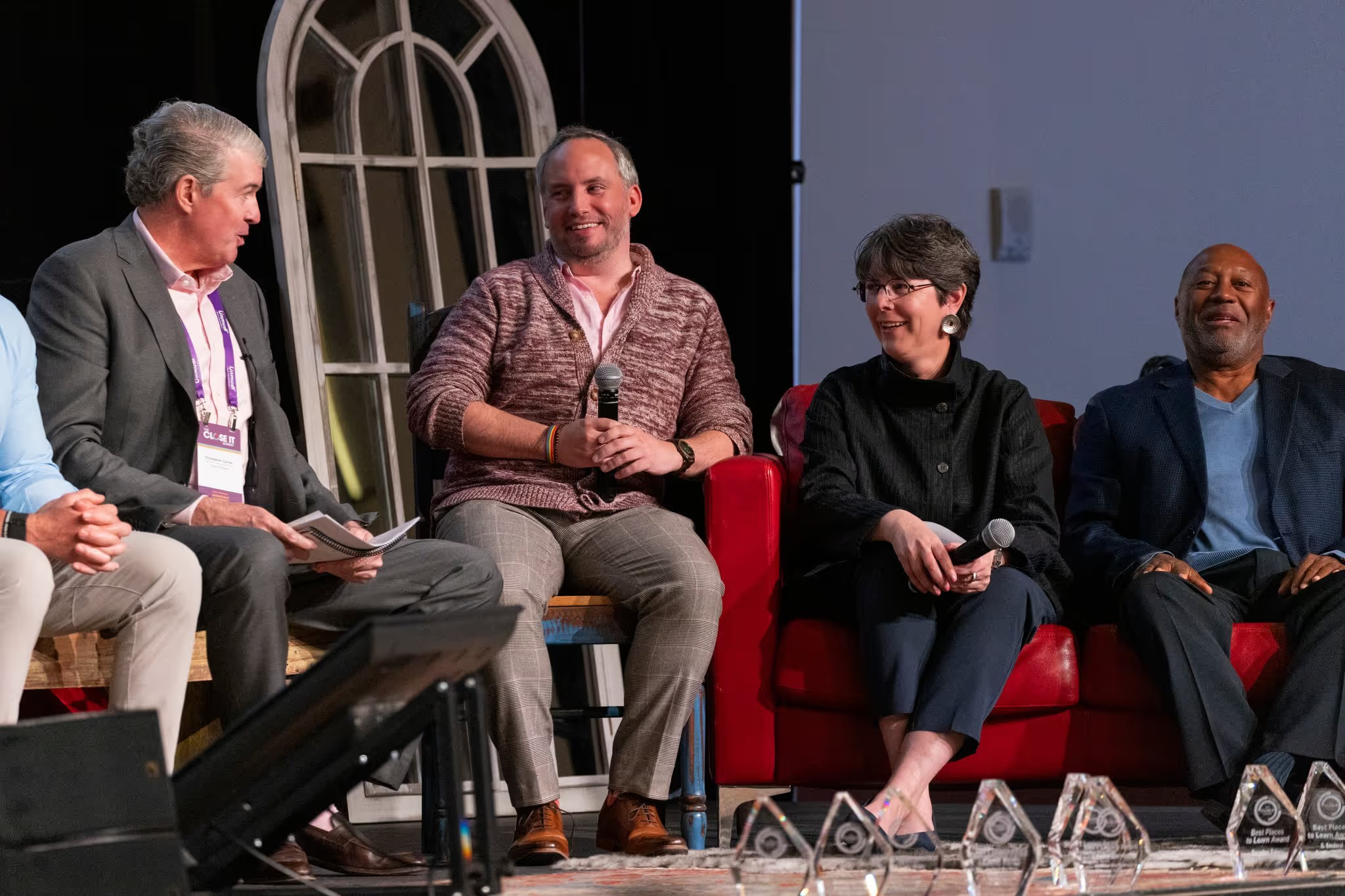
Sixteen leaders from across industry, government, colleges, philanthropy, and investment launched the Technician Economy™ together: Lee Lambert of Foothill-De Anza College, David Kistin of Sandia National Labs, Michael Janke of DataTribe, Niki DaSilva of U.S. Chamber of Commerce Foundation, Edward Leach, former Executive Director of NISOD, Amy Diaz of GateWay Community College (Phoenix), Scott Fast of Innovate+Educate, Rebecca Estrada of Los Alamos National Lab, Jami Grindatto, Ana Maria Aristizabal of Potencia Ventures, Matt Austin of Amazon Career Choice, Jamai Blivin of Innovate+Educate, Christopher Curran of Tyton Partners, Tracy Hartzler of Central New Mexico Community College, and Kristin Richmond of DRK Foundation.
The Santa Fe activation concluded with a leadership roundtable focused on implementation. The discussion moved from national framing to regional execution: how employers, colleges, and regional partners can work together to identify technician demand, align training capacity, reduce learner risk, and convert demand into real technician pathways and hiring outcomes.
This is where the Technician Economy™ becomes practical: not as a concept, but as coordinated regional infrastructure.

National Activation Pipeline
The Santa Fe launch marked the beginning of a broader national activation effort: converting technician demand from a fragmented employer challenge into coordinated regional infrastructure. Additional Technician Economy™ activations are now moving across regions where technician capacity is becoming central to industrial growth, infrastructure readiness, and employer competitiveness.
What to Watch
In the months ahead, the Technician Economy™ Review will be tracking:
The Technician Economy™ is a national field-building initiative for regions, employers, colleges, funders, and civic leaders working to build the skilled technical capacity modern industry requires.